
Nutrition
Is Coffee Good for the Heart?
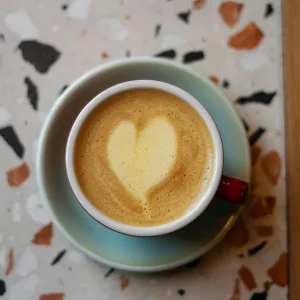
I recently read this article from New York Presbyterian on whether caffeine is good for heart health, citing recent scientific research findings that coffee can reduce the risk of heart failure, atrial fibrillation, and type 2 diabetes.
Of course, I have to weigh in… first by thanking NYP for the impetus and content material—even if we come from different paradigms of thought, science, in my opinion, is entitled to nothing if not thoughtful, yet vulnerable debate.
As everyone who adds one, two, or more teaspoons of sugar to their daily coffee knows, coffee is a bitter agent, and in Chinese medicine the directional chemistry of bitter medicines and/or foods is downward—down and out to be specific—evidenced in the bowel movements that are so common after one, two, or more cups of coffee in the morning. Is bitter medicine healthy? Sure, about half the population will gain more physiological benefit than harm from bitter herbs. The other half might experience the short-term benefit of bitters’ ability to reduce local inflammation, but in the long run it may harm their microbiome and ability to absorb nutrients, which in the longer run will create more inflammation.
“Give her more bitters!” the foolish clinician will shout. “Reduce her inflammation!”
But that second time around she is older and weaker—those initially experienced benefits seem inaccessible, and conventional medicine might increase dosages or attempt to potentiate the first medicine’s effect with another anti-inflammatory, and before we know it all gastrointestinal functionality is gone.
According to the FDA about 4 cups of coffee per day is considered safe for most healthy adults. I don’t know about you, but I can say with full confidence if I drank 4 cups of coffee a day for a month, I would develop some kind of health crisis by the end of it.
My opinion is the reason conventional medical research seems to waffle back and forth so much—during one generation coffee’s the villain—next generation it is alcohol—is because of its greatest flaw: Its insistence on attempting to objectify things as healthy or not, good or bad.
Bitter diuretics have a drying effect on the body, so if you are someone who has more pathological biofilms than deficiency of blood and vital enzymes, you may benefit from coffee in moderation. If you are the inverse, it can have the opposite effect. You might mitigate this by having coffee with food, which can provide enough metabolic moisture to offset its bitter diuresis.
A good way to know whether coffee is good for you is to observe how your body responds to it. If it gives you heart palpitations or makes you feel racy, then 2-4 cups per day will likely not benefit your long-term heart health. The same goes for if it causes you soft stool. If coffee is your key to regular, formed bowel movements then its bitter biochemistry likely agrees with you. If it gives you diarrhea it tells us your gut is a bit too lacking in enzymes to properly metabolize it—not to mention the fact that diarrhea further depletes such enzymes, which will inevitably impact the heart over time, ironically.
Many doctors and scientists are brilliant but in my opinion their brilliance is often handicapped by a reductionist lens. If you want to know if coffee is good for your heart one of the best people to ask is yourself. Or a (real) herbalist.
Herbal Profile: British Yellowhead
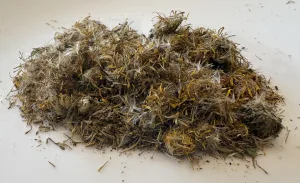 Meet “Xuan Fu Hua,” or the British Yellowhead flower, an herb commonly used to treat acid reflux, cough, or allergies, outlined in the Divine Farmer’s Materia Medica as “salty, warm, and slightly toxic,” originally indicated for fullness below the rib sides and fright palpitations.
Why? How does the Yellowhead flower achieve this?
Salty flavors and their chemistry have a descending action in the body—one that revolves around the manipulation and distribution of fluids—that is so pathogenic fluids can be purged, allowing for healthy fluids to be re-directed, steamed upwards where they belong.
When the heart lacks blood it is more susceptible to fright and palpitations (it isn’t only your anxiety). When the neuromuscular vessels that traverse the ribs lack fluids, we feel pain or tightness. And in many cases of acid reflux the root of the problem is not an abundance of acid, but a lack of fluids and/or electrolytes around our metabolic organs.
Yellowhead flower is not always the magic bullet for all these conditions; but when their root cause is one of gases and fluids in the body failing to descend, perpetuating a vicious cycle that is due to a void of fluids below in the first place, its formulas are a primary route we’ll hope and suspect to be effective. The opposite physiological patterns of GERD will instead be aggravated, because holistic medicine.
The chemical composition of Yellowhead flower includes quercetin, which comes from the white part of grapefruits and oranges and is often sold as a supplement to treat seasonal allergies; caffeic acid, a polyphenol found in coffee beans; and chlorogenic acid, an antioxidant that is also found in coffee beans. This makes sense as the diuretic effect of coffee is obviously a downward one in the body that subsequently lifts functional chemicals upward in turn.
Acid Reflux
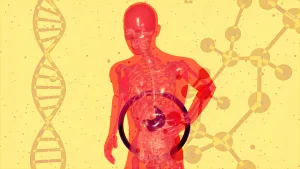
There is a concept in Chinese medicine called “Counterflow qi,” which is in reference to when bodily gases or fluids move in the opposite direction from how they are intended. In the digestive process everything is supposed to move down. Don’t get me wrong—not too quickly—but down nonetheless. Any symptom of movement to the contrary is evidence of metabolic dysfunction.
Belching and burping are generally not perturbing to most of their sufferers, possibly apart from the occasional social embarrassment for loved ones. Nevertheless, they are indicative of some degree of weakness and/or inadequacy of vital substances failing to fully process something in the gut.
Vomiting is the extreme version of this, but the principle is the same. Somewhere in between is acid reflux, or “GERD” (gastro-espophageal reflux disease), which usually manifests as symptoms ranging from a burning sensation in the gut, chest, or throat, to a trapped feeling “below the heart,” as Classical Chinese texts would say. Patients experience this anywhere from once or a few times a week if they “eat something wrong,” to incessantly in every waking moment, understandably prompting them to somehow medicate, one way or another.
What causes this? Frankly, metabolic weakness and/or a lack of functional organ fluids, both of which can be caused by all the usual suspects: poor diet, stress, genetic predispositions, and long-term use of pharmaceutical medications.
Ironically, the drugs most commonly prescribed by conventional medicine for GERD, proton pump inhibitors, work by blocking stomach acid, thereby causing more physiological dryness, aggravating the root cause of the condition while muting its branch. This might be okay for a little while for those suffering from “excess patterns,” where the GERD truly is caused by excessive acid—but for those whose symptoms are due more to weakness, such medications will most likely yield a short leash.
Chinese medicine first attempts to distinguish the pattern—which kind of reflux are you? Then we treat accordingly, using acupuncture points and herbal formulas to calm the metabolic organs by imbuing them with more strength, mucosal fluids, and blood, and over time proper directionality of gases and fluids should follow suit.
In the meantime, it is advisable to eat foods that are easy to digest, such as sweet potatoes, steamed vegetables, eggs, fish, tofu, white rice, and/or pasta. Obviously, avoid as much as possible spicy foods and alcohol, refined sugar, dairy, and raw, uncooked foods. (Deep) breathing can be helpful for its inherent function to descend, as can massaging the stomach with both palms of your hands in 36 clockwise circles around the belly button. Empirical symptom management en route to unearthing the root cause of your unique pattern include DGL licorice pills if your pattern is one of weakness, or mint tea if you produce too much acid.
Mitigating the Side Effects Of Holiday Indulging
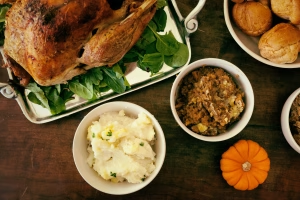
As all of our stomachs, intestines, livers, and pancreases quiver in fear, anticipating the overindulgences to come in the next six weeks, there are steps we can take to mitigate their onslaught of abuse, first and foremost of which is to potentially be mindful to not over-abuse—an unrealistic request for enough of us! So, what OTHER MEASURES can we take?
- Strength training: By making good use of the excess proteins and calories we can getbigger and badder musculature, and since the muscles draw upon the pancreas and stomach for tonification, strength-training provides the additional benefit of putting less burden on these organs, enabling them to better deal with the burden of parties.
- Hot tea: Booze if you must leading up to, during, and even after the meal, but bookmark your gluttony with hot tea—either Pu-Erh, which contains naturally occurring pro-biotics, or whichever flavor floats the boat. Hot tea will dilate and relax the blood vessels of your enteric nervous system (belly) which aids in digestion by breaking down the inevitable accumulations of gravy, yams, and butter.
- Breakfast! Some people make the mistake of skipping breakfast (or even lunch) the morning of Thanksgiving to “make room” for the feast to come. This is an error, as skipping breakfast actually sacrifices some of the gut’s enzymes and beneficial acids, which can make digesting the feast more difficult. Fine if you want to go small, but have something, preferably, oatmeal, millet congee, or eggs and vegetables.
- Stress management: The holidays bring at least one challenging individual into our homes, so in the words of my daughter’s favorite song: “Let it go.” Ignore if possible, just for the day, and re-address if you must the next time you speak to them.
- CHINESE HERBS! Last but not least, YOU GUESSED IT! Commonly used ingredients include hawthorn berry, which can lower cholestrol, magnolia bark if you’re the type who feels gassy and stuffiness in the chest, tangerine peel if you feel too low on appetite to get properly gluttonous, obviously ginger and licorice, the latter if you tend to GERD, also barley sprouts or medicated leaven, which are great for food stagnation.
If you’d like a brief consultation to determine what is the best gluttony-support formulation for your body type and indulgence to come, please don’t hesitate. If not for my own gout disease and general health awareness, I myself would have the inclination to over-indulge frequently, regardless of holiday season.
A brief expression of gratitude. I realize that Chinese medicine is inconvenient. It’s expensive, it tastes bad or it hurts for a moment, it takes time out of the day, etc. etc. I am grateful to all of my patients for trusting me, relying upon me, and staying the course, often through the trial-and-error process that in my opinion real medicine should look like. Happy Thanksgiving!
What Fall Flavor Are You?
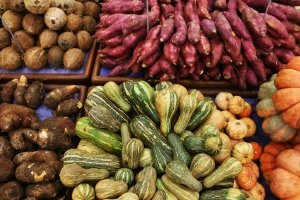
The brilliant rationale behind why the ancient Chinese associated certain seasons of the year with certain organs, then certain organs with flavors of foods (and herbs), had to do with the organic physiological responses to temperature and climate, how they align with each bodily system, and the biochemical reactions incited by each flavor in the body. For example:
Acrid goes up and out. Haven’t we all had the experience of sweating or decongesting after spicy food? Bitter goes down and out. Most have also had the experience of drinking coffee or green tea, then having to go to the bathroom. Sour goes down and in, as does sweet, whereas salty goes down and in, but brings enough water into our cells to then vaporize upwards, which is why its mechanism can RAISE blood pressure.
Unfortunately, in (Traditional) Chinese medical schools, due to modern misinterpretations of the medicine we are lucky if we’re taught half-truths of fact—too often we were told objective untruths—though regarding flavors and seasons we at least got the former.
We were taught that the acrid flavor corresponds with the lungs, which correspond with fall, though this is only one of fall’s flavors, and arguably the less significant one, nor was it ever really explained WHY the lungs correspond with autumn.
Fall is nature’s regression and recession, just as the days grow shorter and animals begin their hibernations, gases and blood in the human body sink deeper, as in towards our adrenal glands, where we can reproduce ample hormones and healthy blood to then rise again in spring. The chemical mechanism induced by acrid foods or herbs DOES NOT encourage this movement. So, while less educated practitioners uniformly advise everyone to eat more onions, garlic, and ginger during fall, recall there should never be any one size fits recommendations in (holistic) medicine or nutrition.
Because the chemistry of acridity moves things upward and out in the body it is surely useful for dislodging the phlegm and mucus often accumulated during allergy, flu, and covid season. It can also be useful for patients who find that during autumn and/or year-round, they have a remarkable difficulty with all kinds of rising—whether out of bed in the morning, off the couch to exercise, intellectually, or in sexual engagement.
For the other half of the population, the more calming, descending mechanism of sour is more logical. Especially since along with bitter, another “flavor of descent,” sour is one the more unrepresented ones in most American diets, maybe partially explaining why modern Americans have so much difficulty with grounding, sleeping, and slowing down.
To understand which flavor should dominate your diet and herbal formulas this season, you can try feeling the (second/middle finger) “guan” pulse position on your left wrist. If the artery feels small or weak your body needs acridity! But if it feels big, inflamed, angry, you need LEMONS 🙂 When life gives you lemons, first feel your pulse. Or get your acupuncturist to do it.
As for nature and safer one size fits all advice: ‘tis the season of root vegetables, so cook plenty of carrots, radishes, beets, yams, and brussels sprouts. In fact, a perfect way to roast the latter is with garlic, onions, and lemon (+salt and olive oil), thereby getting the best of both worlds. Really in my house I should separate them on the pan and take the lemon part for myself and allot all acridity for my wife! But who has the time? I’ll just drink my sour herbs.
