
Traditional Chinese Medicine
Treating Post-Partum Night Sweats with Chinese Medicine
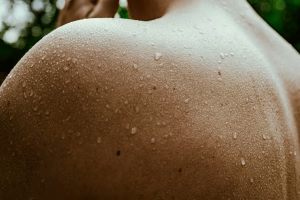
Yayyy, you had a baby! Congratulations! But… now you don’t sleep, your body hurts in any multitude of ways, and another one that probably no one warned you about: When you do actually sleep at night, you’re occasionally woken up by not your baby’s tears, but your sweat. If only your husband could bleed, he’d at least be contributing somehow to the trifecta, am I right?
Why does this happen?
Simple. And most of you already know the answer: Hormones. The concept of “blood” and “vital fluids” in Chinese medicine encompasses hormones as well as neurotransmitters, the latter of which might also explain why Postpartum Depression or Anxiety is so rampant.
Subjective amounts of blood loss begin from the 1st week of pregnancy, when Mom’s vital fluids are being allocated no longer to herself, but to her fetus and placenta. So ladies, your blood is never yours again. Actually it can be, once you stop nursing, but then stress depletes the blood as well, which is apparently unavoidable in parenthood. Fortunately the best means to supplement beyond early bedtimes, are steak and red wine… and herbs.
Sweat loss is not insignificant. While it often offers our bodies a beneficial cooling effect, our perspiration contains within it vital nutrients, such as calcium, magnesium, potassium, amino acids, and anti-microbial peptides, some of which cannot be replaced by supermarket-grade electrolyte beverages.
It is a well-known fact that our body’s detoxification process happens through the liver and kidneys, not sweat glands, so any kooky yoga teachers who ever recommended hot yoga or HIIT training to “detoxify,” could more or less be brought up on malpractice. That is unless you don’t consider exercise the physiological modality it is proven to be.
In Classical Chinese medicine it is said that excessive sweating depletes our body’s “Yang,” which might be partially defined by things such as our amino acids and anti-microbial peptides. So let’s not lose our Yang, because losing Yang eventually leads to losing blood, which perpetuates the cycle!
Acupuncture would use points to calm the hypothalamus and stimulate the adrenals to produce hormones to slow the vicious cycle. Commonly used Chinese herbs might include Gypsum stone (if Mom is very thirsty for cold drinks), Rehmannia root (if there is also still any bleeding and Mom’s feeling emotionally disturbed), or Oyster Shell actually (if there is tightness at the ribs and/or chest, and Mom’s having trouble sleeping).
Please don’t self-prescribe. Consult a real herbalist.
Acupuncture Point for Cardiovascular Health
As someone who comes from a family with cardiovascular issues on both sides it is important for me to be attuned to heart health, not only as a practitioner, but also as a patient.
Unfortunately, as is the case with nearly every condition under the sun, in Chinese medicine there is no one size fits all prophylactic prescription, whether of needle or herb, to prevent cardiac issues. We must due our diligence, understand the full body pattern, and treat every part of it, lest the one neglected will eventually find its way to aggravate the one originally targeted.
Lisinopril is the hypertension medication I see most commonly prescribed, and one of its primary side effects is dizziness. While this is preferable to a heart crisis, it should be understood that this kind of dizziness is exemplary of inadequate blood reaching the head, which means inadequate neurotransmitters reaching the head, which over time may bring with it a whole host of more serious neurological complications.
One way to target support in hypertensive patient and/or those looking to wean off of their medications is to regularly bleed the point, “Lung 5,” or “Cubit Marsh,” located at the crease of the elbow, a bit lateral to the vein we’ve mostly come to know as the blood drawing point.
Why would this work?
First of all, in a lot of people it won’t. Lung 5 is known as the lungs “water point,” partially because its job is to unblock fluid retention in the chest to allow it to descend into the kidneys, then in turn be sent back upwards to calm and help control the heart. If fluid retention in the chest and/or lungs are not present—that is if that is not our etiology—then bleeding this point will likely offer little to no help. Further assessment is required to determine which points and vessels can and should. If fluid retention is present we will likely see dark or distended veins, or spider veins, or fluid amassment in the region of the point around the elbow.
Garlic, ginger, and onions might be advisable. As would Chinese herbs such as Pinella Root.
Another cause for a failure for the lungs to “descend” vital substances into the kidneys is just plain weakness. Call it old age or genetics—whatever floats your boat—but the lungs in this scenario are lacking “qi,” or ample functional gases, to enable them to do their job. In this case we’re more likely to use (“earth”) points such as “Lung 9,” “Great Abyss,” and/or “Heart 7,” “Spirit Gate,” and/or dermatomes on the upper back that correspond to these organ systems.
Lemon water and bitter greens might be advisable. As would Chinese herbs such as Peony Root, Astragalus, Cinnamon, or Schizandra Fruit.
As far as I know, the best ways to prevent heart disease are through regular exercise, stress reduction, and cooked, dark, leafy greens. Beyond that, if it’s in your gene pool and you note congestion at your elbow crease, by all means holler, and I promise to not bleed you out.
Spring Scholarship for Free Acupuncture!
 It’s that time again! As the winter term comes to a close, a friendly reminder of my quarterly offer of free weekly acupuncture sessions to any one patient who cannot otherwise afford treatment. Please let me know if you, a friend, or family member would be a good candidate to allow me to give back.
As always, stipulations include a relative lack of resources (on the honor system), plus an ability to come on Fridays in the late morning or early afternoon when I have more office space available.
I have been fortunate enough to have a patient base that is generally kind, complimentary, and forgiving of my shortcomings, but I’d also like to take this opportunity to request any constructive criticism or feedback on either my space or treatments. Even if it is something seemingly menial, such as pillow comfort or temperature in the treatment room, if you’ve thought it somebody else probably has as well, and all parties would benefit from your honesty. As clinicians, I believe it is as important to accept such reporting as it is to remain true to our fundamental philosophy and approach.
Happy upcoming spring solstice! If you have trouble waking up in the morning, ’tis the season for acrid and spicier foods to encourage the seasonally organic upward movement of blood and neuro-chemicals. If you tend to wake up too early or feel generally over-stimulated ’tis the season for more sweet foods, such as steak and rice, to mitigate their surge. Refined sugar also works in the short-term, but obviously leaves inflammation in its wake, which leads to perpetually more aggravated surges, henceforth more dependency on sugar!
My favorite bit from James Clear this week:
“The modern world is optimized for convenience, not improvement.
The default path is usually the more convenient path. And I get it. Who wants their days to be a pain in the neck? I like sitting in air-conditioned rooms and watching my favorite shows too.
But the body and mind only grow when placed under a stimulus. If you want improvement, you have to choose something different than convenience.
It can be lovely to have a day where you do not push yourself, but it rarely works out well if you have a life where you do not push yourself.”
Is Coffee Good for the Heart?
I recently read this article from New York Presbyterian on whether caffeine is good for heart health, citing recent scientific research findings that coffee can reduce the risk of heart failure, atrial fibrillation, and type 2 diabetes.
Of course, I have to weigh in… first by thanking NYP for the impetus and content material—even if we come from different paradigms of thought, science, in my opinion, is entitled to nothing if not thoughtful, yet vulnerable debate.
As everyone who adds one, two, or more teaspoons of sugar to their daily coffee knows, coffee is a bitter agent, and in Chinese medicine the directional chemistry of bitter medicines and/or foods is downward—down and out to be specific—evidenced in the bowel movements that are so common after one, two, or more cups of coffee in the morning. Is bitter medicine healthy? Sure, about half the population will gain more physiological benefit than harm from bitter herbs. The other half might experience the short-term benefit of bitters’ ability to reduce local inflammation, but in the long run it may harm their microbiome and ability to absorb nutrients, which in the longer run will create more inflammation.
“Give her more bitters!” the foolish clinician will shout. “Reduce her inflammation!”
But that second time around she is older and weaker—those initially experienced benefits seem inaccessible, and conventional medicine might increase dosages or attempt to potentiate the first medicine’s effect with another anti-inflammatory, and before we know it all gastrointestinal functionality is gone.
According to the FDA about 4 cups of coffee per day is considered safe for most healthy adults. I don’t know about you, but I can say with full confidence if I drank 4 cups of coffee a day for a month, I would develop some kind of health crisis by the end of it.
My opinion is the reason conventional medical research seems to waffle back and forth so much—during one generation coffee’s the villain—next generation it is alcohol—is because of its greatest flaw: Its insistence on attempting to objectify things as healthy or not, good or bad.
Bitter diuretics have a drying effect on the body, so if you are someone who has more pathological biofilms than deficiency of blood and vital enzymes, you may benefit from coffee in moderation. If you are the inverse, it can have the opposite effect. You might mitigate this by having coffee with food, which can provide enough metabolic moisture to offset its bitter diuresis.
A good way to know whether coffee is good for you is to observe how your body responds to it. If it gives you heart palpitations or makes you feel racy, then 2-4 cups per day will likely not benefit your long-term heart health. The same goes for if it causes you soft stool. If coffee is your key to regular, formed bowel movements then its bitter biochemistry likely agrees with you. If it gives you diarrhea it tells us your gut is a bit too lacking in enzymes to properly metabolize it—not to mention the fact that diarrhea further depletes such enzymes, which will inevitably impact the heart over time, ironically.
Many doctors and scientists are brilliant but in my opinion their brilliance is often handicapped by a reductionist lens. If you want to know if coffee is good for your heart one of the best people to ask is yourself. Or a (real) herbalist.
Herbal Profile: Chi Xiao Dou (Adzuki Beans)!
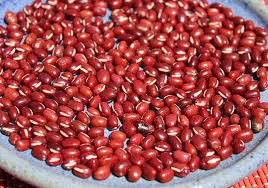 In Mexico black or refried beans are most popular. Caribbeans eat black peas, Indians more lentils, and of course Americans prefer the sweetest of all, baked beans. In China though, adzuki beans are more than just a delicacy—they are an important ingredient in our classical pharmacopeia, often used to treat conditions of the intestines or skin, the latter frequently manifesting pathologies of the former, thereby informing us of the underlying pattern.
For example, while redness around the forehead points to suspected biofilms of the intestines, acne that falls more around the jawline, chest, or upper back suggests biofilms of the stomach. Chi Xiao Dou, or Adzuki Bean, can be used to treat either, provided it is appropriately dosed within the context of an accurate holistic formula. It is also useful for eliminating or minimizing liver spots, pus accumulation around the eyes, and other random skin discolorations.
Listed in our texts as sweet, sour, and neutral in properties, its neutrality allows it to diffuse dampness in the body that is either cold/inhibitory or hot/excitatory in nature. Its sweetness encourages the body to generate a healthy amount of fluids, and its astringency obviously helps our body to hold that which is leaking, or sinking. It is said to gently promote blood circulation between the bowels and the skin layer.
This might explain why it comprises half of the formula, Dang Gui Chi Xiao Dou Tang, most commonly prescribed to treat certain types of hemorrhoids and skin issues around the buttocks.
If the shoe doesn’t fit—that is if this formula does not fit your pattern, but you still suffer with chronic hemorrhoids, it is advisable to regularly consume adzuki beans with your meals to take advantage of its biofilm dissolving properties. By relieving intestinal vessels of inflammation this should take pressure off of the rectum.
Adzuki beans go well with rice and/or Latin or Asian dishes, also within rice congees plus a boiled egg, providing additional protein to an otherwise dish of just white rice. If you don’t love the taste as much you can also do what I do for my daughter, which is mix the adzuki beans with baked beans as a side dish on hamburger and hotdog nights.
To treat skin conditions Chi Xiao Dou is generally paired one way or the other:
- With the aforementioned, Dang Gui to not only help to generate red and white blood cells, but also to courier them to the surface to nourish and lubricate the skin.
- With more bitter, inhibitory, heat clearing medicinals, such as rehmannia root to mitigate the body’s inflammatory response, known to flare upwards in the form of jawline or upper back acne (“Backnee”).
If you think adzuki beans might help you or a loved one reach out—or just go to the store, purchase, and cook them up! Preferably organic, as inorganic legumes can be particularly vulnerable to chemicals and pesticides. Any recipe or preparation questions, let me know!
